

One shoutout, thousands of clicks. That’s the power of influencer marketing even in the eCommerce world. With audiences increasingly tuning out traditional ads, brands are turning to authentic, creator-led storytelling that builds trust and drives measurable results. Today’s consumers rely heavily on social media influencers for eCommerce recommendations.
Here’s where Connext, a smart influencer marketing platform for eCommerce, comes in. Connext connects D2C brands with performance-focused creators. By combining data-driven discovery with seamless campaign management, Connext helps brands turn influence into actual conversions.
Why Influencer Marketing Works for eCommerce
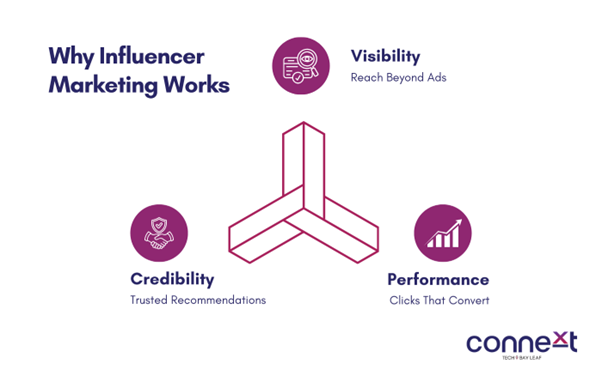
Influencer marketing for eCommerce revolves around three key elements—visibility, credibility, and performance. For customers scrolling past thousands of ads every day, influencers offer a refreshing alternative with personal, relatable, and real content.
Builds trust through social proof:
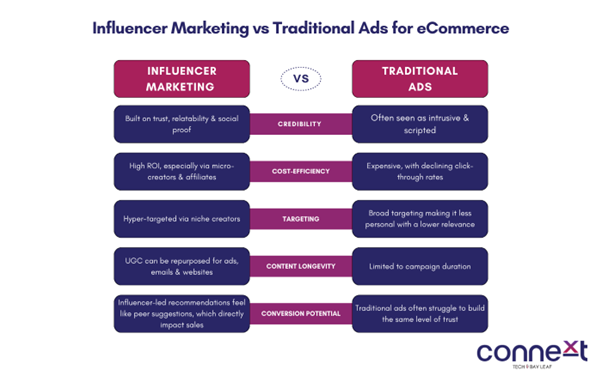
Modern shoppers rely heavily on recommendations before making a purchase. When they see real people (not celebrities) endorsing a product, it creates instant credibility. Influencers act as digital word-of-mouth advocates, showing how products fit into everyday life.
Drives traffic straight to your product pages:
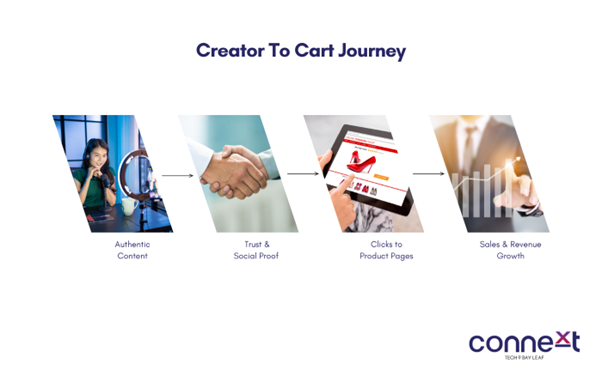
Influencer marketing simplifies the path from interest to purchase. With features like tagged products, story links, and shoppable posts, audiences can go from discovering your brand to adding to cart in seconds. It makes creators the bridge between inspiration and checkout, sending high-intent customers straight to your store.
Boosts conversions with authentic endorsements:
Audiences today can easily tell when a post is overly promotional. When influencers share honest reviews, personal stories, or results they’ve experienced, followers see it as a trusted recommendation rather than a sales pitch.
Combines awareness and performance marketing:
Unlike traditional ads that focus only on reach or branding, influencer marketing combines both awareness and measurable results. It builds top-of-funnel recognition while delivering trackable ROI through engagement, clicks, and conversions. Whether you’re a new D2C brand or an established online store, the right influencer strategy can help you stay visible and profitable, creating a balance between brand love and sales growth.
In fact, influencer content delivers 11x higher ROI than traditional advertising, making it one of the best influencer marketing tactics for eCommerce brands looking to scale efficiently.
It blends credibility with performance, telling your story and selling it.
Top eCommerce Influencer Marketing Trends 2025
Influencer marketing in 2025 is all about smarter, performance-backed strategies. Here are some trends reshaping eCommerce:
1. Rise of AI-Matched Micro-Influencers
Brands are increasingly tapping into micro-creators with tight-knit communities. AI-powered platforms like Connext help identify creators with high conversion potential.
2. Shoppable Live Streams
Real-time demos + instant purchasing = higher conversion rates. Live commerce continues to dominate categories like beauty, fashion, and electronics.
3. UGC as Paid Ad Creative
Brands now reuse influencer videos as high-performing ad creatives, especially on Meta and TikTok.
4. Performance Influencers on Affiliate Models
The industry is shifting from fixed payments to performance-based models like CPA and revenue share. This way, creators earn based on results, and brands get a clearer view of their ROI.
5. Long-Term Creator Partnerships
Instead of one-off collaborations, brands are investing in creator ambassadors who represent the brand consistently—building deeper trust over time.
These trends reflect the shift from vanity metrics to performance-driven influencer marketing—where every post has a measurable impact.
How eCommerce Brands Can Leverage Influencers
A strong eCommerce influencer strategy uses creators at every stage of the customer journey, from awareness to conversion.
- Product Launches: Collaborate with micro-influencers for authentic unboxing videos, first impressions, and reviews.
- UGC Campaigns: Encourage real customers to share their stories, helping create influencer content that converts.
- Affiliate Collaborations: Offer commissions per sale to align incentives and track performance easily.
- Seasonal Promotions: Partner with creators to amplify festive sales, limited-edition launches, or discount events.
These campaigns show how to use influencers to increase sales while strengthening community engagement.
Choosing the Right Influencers for eCommerce Success
A winning D2C influencer strategy starts with matching your brand to creators who truly reflect its values. Look beyond follower count—focus on engagement, relevance, and audience overlap.
Review audience data to make sure their community overlaps with your ideal customer base. With Connext, you can uncover creators backed by real insights—those who not only reach your audience but can actually drive sales.
A strong match ensures your campaigns reach people who are most likely to buy.
Creating High-Converting Influencer Content
Great influencer content feels organic, not overly produced.
- Prioritize authentic storytelling: Real-life experiences outperform polished product shots.
- Blend creativity with brand messaging: Let creators highlight key product benefits in their voice.
- Repurpose influencer content: Use high-performing posts in paid ads, email campaigns, and product pages.
Measuring ROI & Sales Impact
Tracking the influencer campaign ROI is crucial for scaling results.
- Monitor clicks, conversions, and engagement rates.
- Use UTM links, discount codes, or Connext’s analytics tools for accurate sales attribution.
- Identify top-performing influencers for ongoing partnerships and repeat success.
Case Study: How a D2C Skincare Brand Grew 40% Through Micro-Influencers
A skincare startup partnered with a network of 50 micro-influencers on Connext. Here’s what worked:
- Influencers shared authentic routines using the products
- Each post included UTM links for precise attribution
- The brand repurposed top-performing videos for Meta ads
- A commission-based affiliate model ensured high creator motivation
Outcome:
- 40% increase in monthly revenue
- 3x higher conversion rate from influencer traffic
- 22% drop in customer acquisition cost (CAC)
How Connext Empowers eCommerce Growth
Connext simplifies influencer marketing for D2C brands with an all-in-one platform that turns influence into measurable outcomes.
- Curates influencers by niche, audience, and performance history.
- Automates outreach, collaboration, tracking, and payments.
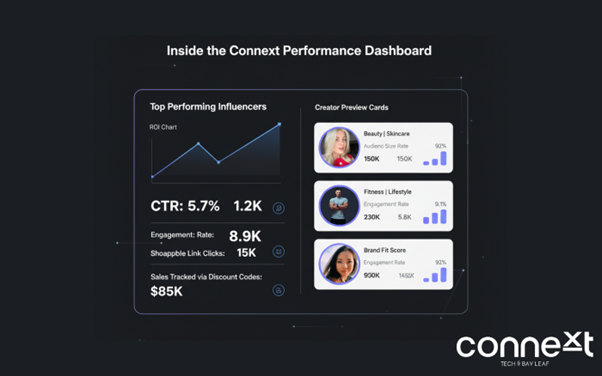
- Offers performance dashboards to track ROI in real time.
- Ensures every piece of content remains authentic and brand-aligned.
Whether you’re running influencer marketing for Shopify stores or scaling a D2C brand, Connext makes it easy to collaborate with influencers and grow your eCommerce presence.
Turn Influence into Revenue
Influencer marketing for eCommerce is no longer just about awareness. It’s a proven engine for conversions and long-term growth. Pair the right creators with the right strategy and watch trust translate into sales.
With Connext, you can streamline every step from finding the right influencers to tracking ROI and transform influence into measurable revenue.
Start your next influencer campaign with Connext. Here, authenticity meets performance.
FAQs
Influencers drive sales by combining social proof with seamless product discovery. Their authentic reviews, tagged products, and shoppable posts guide followers directly from content to checkout, sending high-intent buyers straight to your store.
For product launches, content that feels real and experience-driven performs best. Think unboxings, first impressions, tutorials, and short UGC-style videos. These formats help audiences understand how the product fits into everyday life and build immediate trust.
Brands track ROI through clicks, conversions, discount code redemptions, and engagement rates. Using UTM links and performance dashboards (like the ones in Connext) gives a clear picture of which creators are driving sales and how effectively each campaign performs.
Platforms like Connext are ideal for D2C brands because they combine creator discovery, outreach, collaboration, tracking, and payments in one place. They also use performance insights to match brands with influencers who can actually drive conversions—not just impressions.
Micro-influencers offer niche relevance and highly engaged communities. Their recommendations feel personal and trustworthy, which boosts conversions. They’re also cost-effective, making them perfect for D2C brands looking to scale through authentic, performance-driven creator partnerships.
